Why a Room Changes the Sound of a Small Concert
Why a room changes the sound of a small concert: learn what to notice in its shape, surfaces and seating so you can choose a place that suits the music.
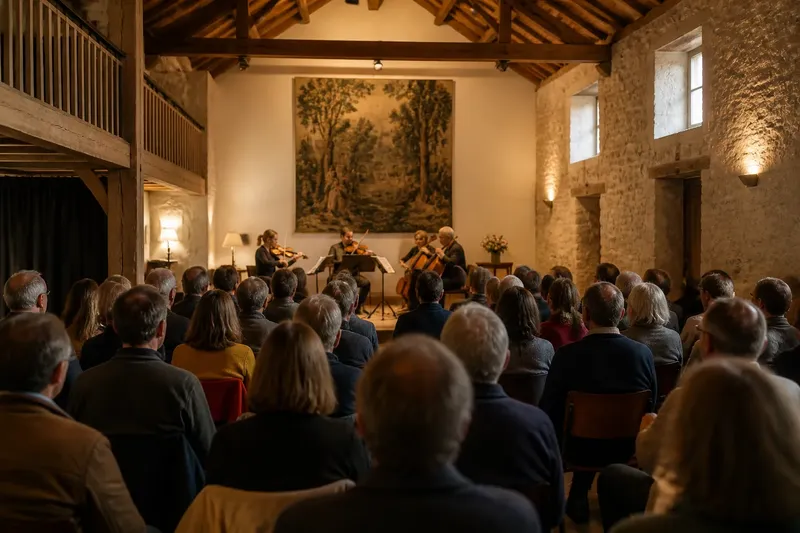
The most common mistake when choosing a seat at a small concert is to assume the front is always best. That can leave you hearing a bright, direct sound while missing the blend that makes the music satisfying. Why a room changes the sound of a small concert is a practical question: its shape, surfaces and audience arrangement all affect what reaches your ears.
Start by looking at the room, then consider the music and where listeners are placed. You do not need acoustic equipment or a technical vocabulary. A quick walk around a village hall, chapel or converted barn can reveal useful clues, provided you treat them as clues rather than promises.
Read the room shape
Notice the room’s proportions before you settle on a seat. A long, narrow hall tends to make the distance between the performers and the far end more obvious. Listeners near the front may hear detail clearly; those farther back may hear more of the room’s blended response. In a broad, shallow space, side-to-side distance can matter as much as front-to-back distance.
Look for alcoves, low beams, balconies and uneven ceilings. A balcony can create a useful listening position above the main floor, but its underside may also make the sound seem more enclosed. A shallow alcove may feel sheltered while offering a less direct view of performers. These effects vary with the music, the room and the number of people present.
Check whether the performers sit against a wall or in the middle of the space. A hard wall behind them can send sound back toward the audience. A position closer to the center may spread sound more evenly, though it can make the arrangement less convenient for listeners and performers alike. Do not assume that a symmetrical room has an equally good sound everywhere.
Notice the surfaces
Hard surfaces such as plaster, stone, glass and bare wood reflect sound. In a chapel or a hall with a polished floor, notes may hang in the air after the performers stop playing. That lingering sound can make a choir or slow instrumental piece feel connected, but rapid passages may become less distinct.
Soft materials absorb some of that energy. Curtains, upholstered chairs, coats and a seated audience can reduce the room’s liveliness. A carpeted community room may sound controlled and clear, but it can also make a large ensemble seem less expansive. The room’s contents matter: a hall with stacked chairs or heavy curtains drawn across a window may sound different from the same hall set up for a summer gathering.
Listen for the balance between direct sound and reflections. If consonants in a singer’s words are easy to follow, the sound is likely reaching you clearly enough. If a note seems to continue into the next one, reflections may be masking detail. That does not make the room poor. It tells you something about what the space favors.
Match the room to the music
Think about what the programme asks you to hear. A solo violin, a small string group and a choir make different demands. A little natural resonance can lend warmth to sustained notes. Crisp, quick music generally benefits from clearer separation between notes. A spoken introduction or sung text can be harder to follow in a lively room, especially from a distant seat.
For a quiet solo performance, a position closer to the performer may help you hear bow changes, breath and other fine details. For several instruments playing together, a seat farther back may make the ensemble sound more balanced. If the music relies on voices, consider whether you can see the performers’ faces; visual cues can help you follow the words when the room softens their edges.
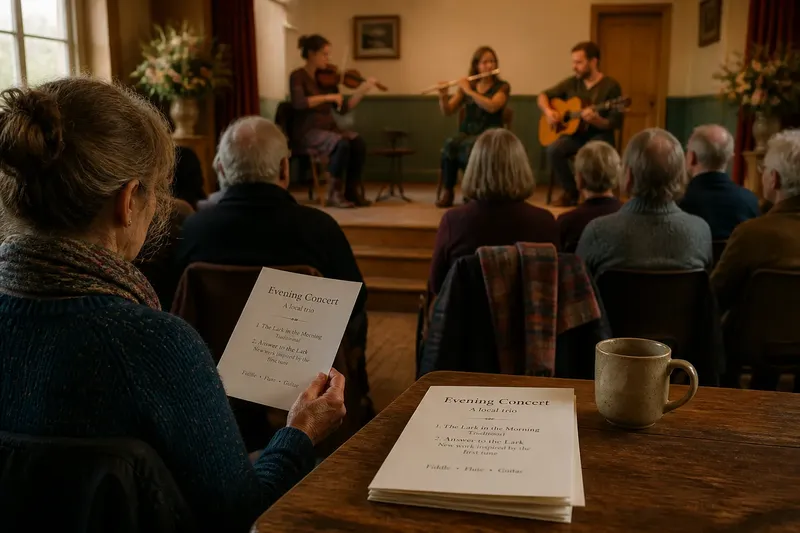
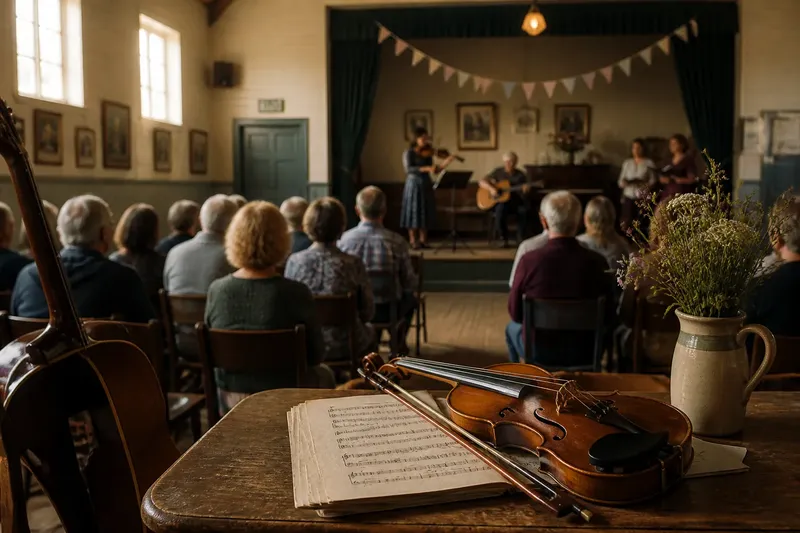
Imagine you arrive at a village hall for a chamber group and see that the musicians are set up near one short wall. The front row is close, while the rear half of the hall is open. If you want to follow the players’ individual lines, you might choose a front-side seat with a clear view. If you care more about hearing how the parts fit together, you might try a central seat farther back. Either choice is a reasonable response to the same room and programme.
Choose a listening position
Before taking a seat, look for a position that gives you both a clear view and a plausible path for sound. A pillar, open doorway or large display can block either one. Seats near a side wall may emphasize reflections from that wall, while the middle of the room often gives a more even impression. But a center seat is not automatically ideal if it leaves you far from a small ensemble.
If seating is unassigned, arrive with enough time to observe the layout. Notice whether chairs face the performers directly or sit in a shallow arc. An arc can help people see one another as well as the music, and can make a small group feel less distant. Rows may suit a larger audience but can leave listeners at the sides hearing the performance from an angle.
During a quiet moment before the concert begins, take in a few ordinary sounds: a voice, a chair moving, or footsteps across the floor. These offer a rough sense of how quickly the room returns sound. Do not treat a brief sound check as a verdict on the whole concert; music occupies the room differently, and an audience changes its acoustic character.
Questions about room sound?
Is the middle of the room always best?
No. It can provide a balanced perspective, but the room’s shape, the performers’ position and the music all matter. A seat closer to one side may give you a better view or a clearer sense of a solo line.
Do curtains make a concert sound better?
They can reduce reflections and make rapid notes easier to distinguish, but they may also reduce the room’s sense of resonance. Whether that helps depends on the performers and the sound the music needs.
Why does a full hall sound different?
People, coats and occupied chairs absorb and scatter some sound that would otherwise reflect from empty surfaces. The change may be subtle or noticeable, so a room heard during setup can give only an imperfect preview of the concert.
Should I sit close to the performers?
Close seating can bring detail and a strong sense of presence, but it may make the parts of an ensemble seem less blended. Choose it for proximity and visibility, not on the assumption that it offers the most complete sound.
Use simple observations
For a future visit, remember what you actually noticed rather than labeling a venue “good” or “bad.” You might note that the rear seats carried the choir’s words well, or that a hard side wall made a solo sound especially bright. Those observations can guide your next seat choice without pretending that the same result will occur for every programme.
If you attend with someone else, compare what each of you heard during the interval. One person may notice the low notes while another follows the singer’s diction. That difference can reflect position as much as preference. It is a useful way to learn the room, not a contest over who listened correctly.
When you next wonder why a room changes the sound of a small concert, begin with the practical question of what you want to notice: clarity, blend, resonance or a close view. Then choose a seat that gives that quality a fair chance. The best position may change with the room and the programme, which is a more useful answer than a universal front-row rule.