The Myth of the One Proper Way to Listen
Rural concert listening need not be a test of stillness or musical knowledge. Follow a sound, read the room, and enjoy the music on your terms.
The most common mistake at a rural concert is treating listening as a test of stillness or musical knowledge. That can cost you the pleasure of noticing what is happening: a neighbor holding their breath at a turn in the melody, a child following the bass line, or a tune that comes back to mind on the walk home. Rural concert listening is attention, not an exam.
Listening without a test
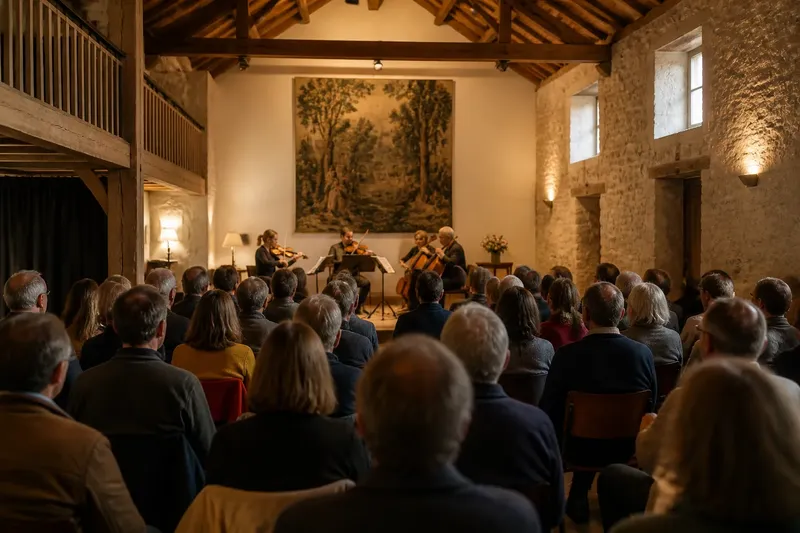
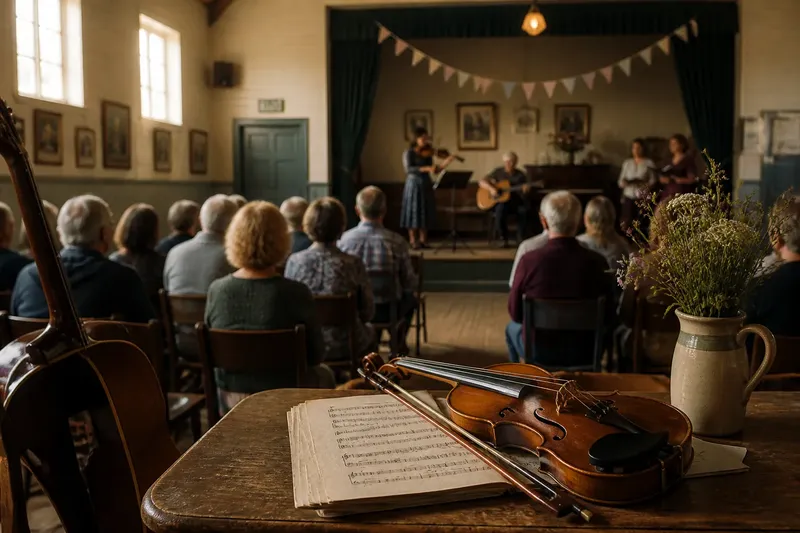
In a village hall, chapel, barn, or community room, the audience may include seasoned players and people who came because a friend is performing. They do not need the same vocabulary to hear the same music. One person may notice how a fiddle phrase circles back; another may recognize the shape of a dance.
Specialist knowledge can add detail, but it is not an entry fee. Listen closely without naming a mode, identifying an instrument, or knowing a piece’s history. A useful question is simple: what changes as the music goes on?
Follow a repeated rhythm, a shift in volume, a pause before the next tune, or one instrument answering another. These are things the ear can pick up directly. If a programme names a jig or hymn tune, treat the name as a clue, not a test.
Attention takes many forms
Stillness is one way to listen well. It gives a quiet passage room and helps the audience hear changes in phrasing. But a concert can also invite attention through movement, recognition, or a shared response.
- Close attention: Follow one instrument, such as the guitar’s bass notes, through a whole piece.
- Wide attention: Notice how players coordinate, including a glance that cues a change.
- Remembering attention: Connect a melody with a place, a family gathering, or a dance you know.
- Social attention: Listen to the room’s response and notice when a tune gathers people into the same moment.
Concentration need not be constant. Attention wanders. It may return when a familiar refrain begins or when a fiddle makes an unexpected turn. Letting it return is part of listening; policing every stray thought is mostly a way to miss the next phrase.
Movement and room manners
Some rural performances include dancing, a caller, or an informal space where children shift seats and listeners move between the door and the back row. Movement does not automatically mean inattention. A dancer may be listening with their feet; someone standing at the edge may hear more comfortably than someone folded into a crowded chair.
Room manners still matter. Keep conversation out of quiet passages, avoid blocking other people’s view, and follow the performers’ or organizer’s cues about dancing and movement. At a seated recital, a shifting audience can distract. At a participatory dance, staying still may miss the point. Read the room and respond to the event in front of you.
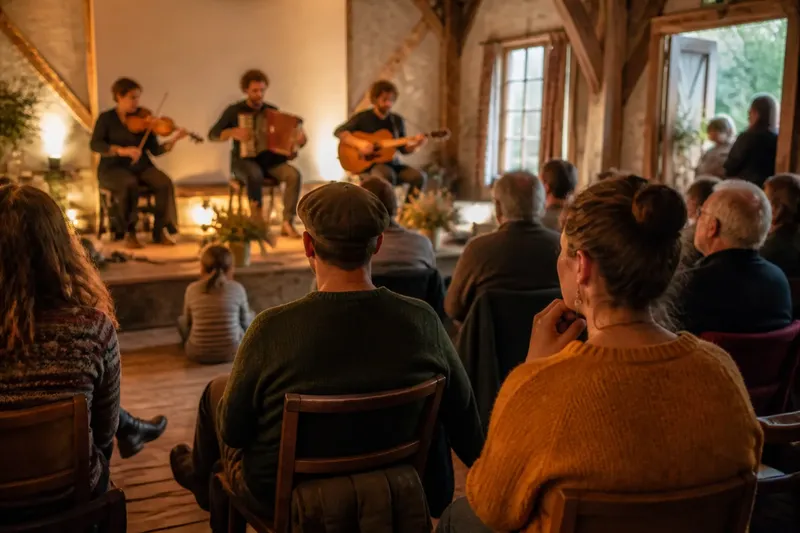
Imagine you arrive at a village hall where a trio is playing a slow air followed by a dance tune. You know neither title, but notice the accordion holding a long note before the guitar sets a brisker pulse. You keep still during the air, then let your foot tap during the dance tune without blocking anyone’s view. The observable result is that you follow the change in mood while leaving nearby listeners space to hear.
What should I listen for?
Do I need to know the tune’s name?
No. A title can connect a performance to a tradition, but the melody remains available without one. Start with its pace, repetition, or the way one player answers another.
Is it rude to tap or move?
It depends on the performance and the space. A restrained foot tap may suit a dance tune, while movement during a quiet solo may distract nearby listeners; read the room and follow the performers’ cues.
What if my attention wanders?
That is ordinary, especially during a long set or in a warm hall. Pick up the music again at the next change, such as a new rhythm, a returning phrase, or a shift in the ensemble.
Can a beginner listen closely?
Yes. Choose one audible feature and follow it for a while: the singer’s phrasing, the drum’s pulse, or a repeated bass pattern. Curiosity is enough; technical terms can come later if they become useful.
Small ways to join in
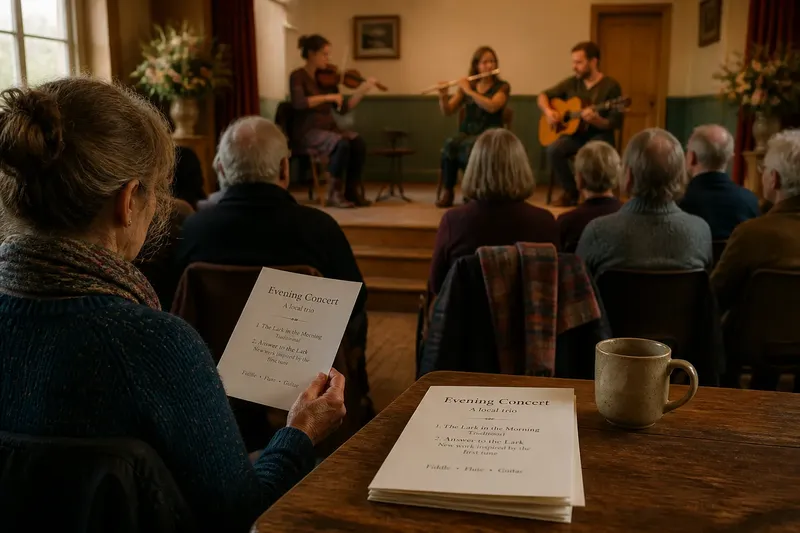
Before the performance, glance at the programme if one is available. It may identify instruments or give you a thread to follow, but you can leave it folded once the music begins. If a spoken welcome explains when audience participation is expected, use that information rather than guessing.
During a set, change your focus once. Follow the melody through one tune, then listen to the spaces between notes or to the way the ensemble keeps time. If you are seated near an open door or a noisy entry, move to another available spot if doing so will not obstruct anyone.
Afterward, ask which sound stayed with someone. They may mention a lyric, a rhythm, or the moment the room fell quiet. Their answer need not match yours. At the next rural concert, rural concert listening can begin with one sound that draws your attention; leave room for the music to change it.