Before the Village Hall Concert: How Local Music Gatherings Took Shape
Explore how local music gatherings took shape, from household playing to village hall concerts, and learn what the venue changed about taking part.
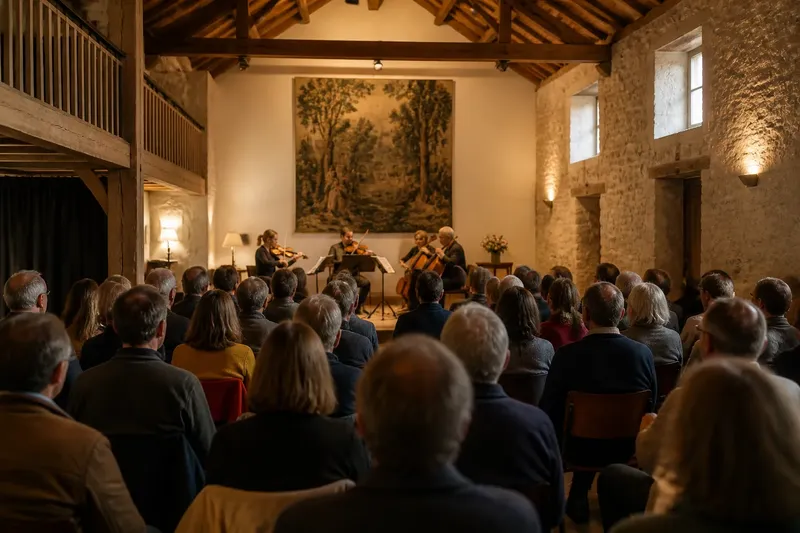
The common mistake is to treat a village hall concert as a city concert made smaller. That overlooks what changed when music moved from household and communal settings into an announced event: someone had to host it, find a room, invite an audience, and give the evening a shape.
Local music gatherings developed differently from one rural community to another. Without a specific place and period, it is safer to describe recurring settings and choices than to claim a single historical sequence. Music at home, in churches, schools, inns, and shared rooms could continue alongside organized concerts.
Music before concerts
In many rural settings, music belonged to an activity already under way. People sang while working or socializing, played instruments at home, joined seasonal customs, or made music for worship and community occasions. The line between performer and listener could remain loose.
A household gathering might include someone playing a tune, others singing along, and listeners talking between songs. Music in a communal room might accompany dancing or mark a particular occasion. These gatherings served purposes different from a concert, where an audience was expected to attend to a sequence of performances.
Local customs varied. A church, schoolroom, or inn carried expectations shaped by its role in community life. The same person might sing in one setting and listen in another; the building alone did not determine how formal the music would be.
Organized local concerts
An organized concert gave a gathering a clearer public shape. Someone selected an occasion, arranged performers, and told people they were welcome. A music society, school, church group, charitable committee, or informal group of residents might take on that work.
The reasons differed by community. A benefit, seasonal celebration, visiting performer, or program prepared by local singers and instrumentalists could all provide a reason to assemble. An announced event made the invitation clearer and gave the evening an expected beginning, sequence, and end.
In some places, local teaching and family music-making supplied performers and skills. Community organizations offered occasions to meet beyond work and worship. Transport and communication could also affect who was able to attend or perform, but those conditions varied by place and period. They do not establish one general path from household music to concert life.
The village hall’s role
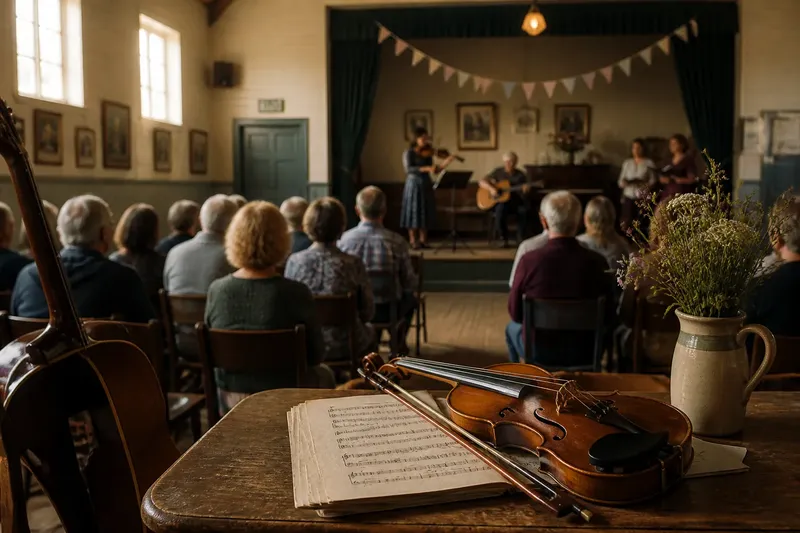
A village hall offered a room for shared use rather than one household or institution alone. The same space could host a concert, meeting, dance, or supper. Organizers could adapt it to the occasion without treating music as the sole property of a church, school, or private home.
A familiar hall could make an event easier to arrange again. Residents might know where to go and recognize the people involved, while the room gave an existing social network a place to gather. The hall did not create the music or the community; it provided a flexible setting for both.
That setting could affect the program. Local performers might share an evening with visitors, and formal pieces might sit beside songs or tunes familiar to the audience. The appeal did not have to depend on concert-hall polish. Recognition of the music and the people taking part could matter just as much.
Local organizers
Concerts depended on practical work. Organizers might book performers, arrange the hall, circulate notices, collect contributions, and prepare the room. In a small community, a few residents could carry several of those tasks rather than handing them to a permanent arts organization.
Schools and churches could contribute performers, rehearsal space, or an established audience. Local musicians brought knowledge of songs and instruments; teachers or other skilled players might help shape a program. A visiting performer added another kind of occasion when a local group arranged the appearance.
That work was not necessarily shared evenly. The people with time, authority, or confidence to organize could influence what was heard and who felt welcome. A concert’s public setting did not automatically make it equally accessible in practice. The venue’s role and the organizers’ choices helped form its customs.
Audience habits
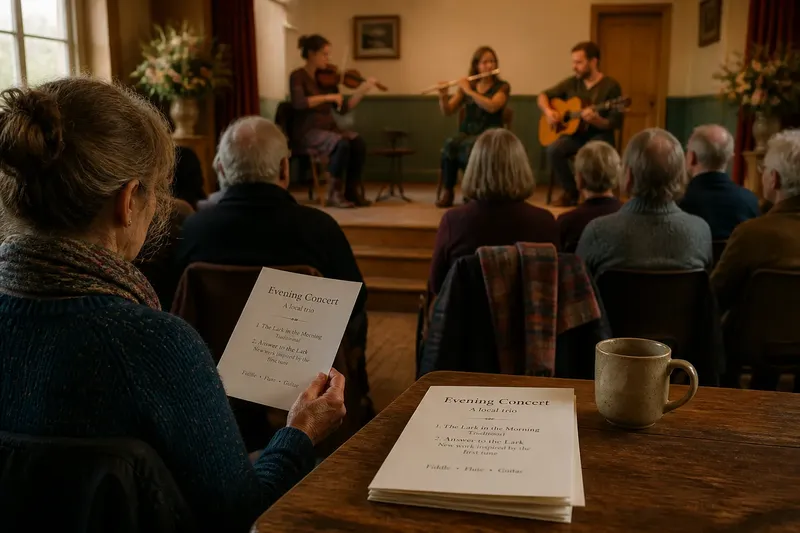
With a more ordered program, listening could become a distinct activity. People might sit together and attend to one performer at a time instead of joining a song or talking around a player. The program signaled that each contribution had a place.
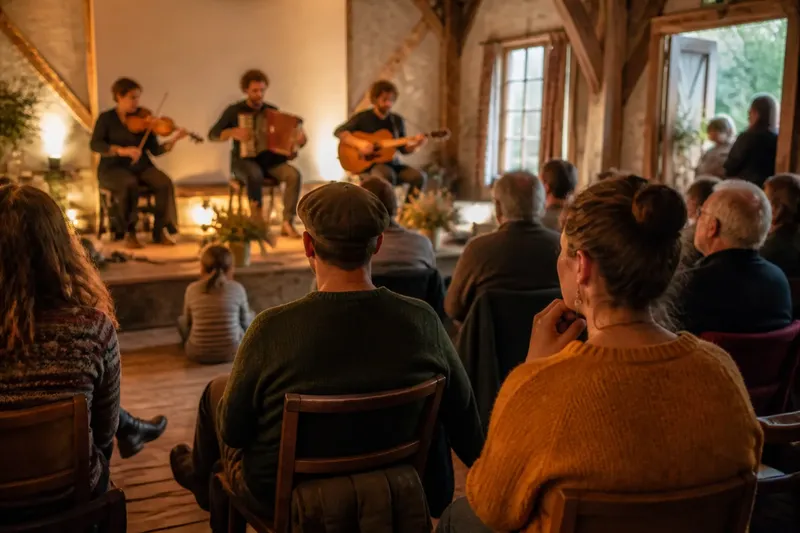
That shift did not eliminate social participation. Audiences could sing along, applaud, speak with performers afterward, or treat the evening as a gathering as well as a performance. A local concert could combine attentive listening during a piece with neighborly conversation around it.
The result depended on the occasion. A concert designed for quiet attention asked something different of its audience from an evening that included communal singing or dancing. Neither approach followed automatically from holding the event in a village hall.
Questions about local concerts?
Were village hall concerts always formal?
No. Some had an announced program and a clear performance order; others included singing, dancing, or conversation. The occasion and local custom mattered more than the building alone.
Did concerts replace music at home?
No. Household playing and singing could continue alongside organized events. The settings offered different ways to make and hear music.
Why did local groups arrange concerts?
Groups might organize an event for shared enjoyment, a community occasion, fundraising, or a chance to present local and visiting performers. The purpose could shape the program.
Was the village hall the first local concert venue?
No. Homes, churches, schools, inns, and other shared rooms could host music. The hall’s particular role was to provide a flexible place for different kinds of local activity.
Reading the tradition today
To understand a local music gathering, look beyond the repertoire. Ask who hosts it, whether local or visiting performers lead the program, and whether the audience is expected to listen quietly, join in, or move between the two. Those choices show how a particular event balances performance and social life.
Say a local group plans an evening with a visiting fiddler and neighborhood singers. The starting point is a hall, the two kinds of performers, and an aim to include both a prepared performance and familiar songs. The organizers put the fiddler’s set first, invite the singers to follow, and leave time for conversation. The expected observable result is an evening with a clear performance sequence and a social interval, rather than one mode of attention throughout.
Local music gatherings are best understood as overlapping ways of making and hearing music, not as a simple progression from informal rooms to formal concerts. A village hall made one kind of event easier to host in a shared space, but its character still depended on the people who organized it and the audience they invited.
At a village hall concert, notice who arranged the evening and what the program asks the audience to do. That detail can reveal whether the gathering is chiefly a performance, a communal occasion, or deliberately both.