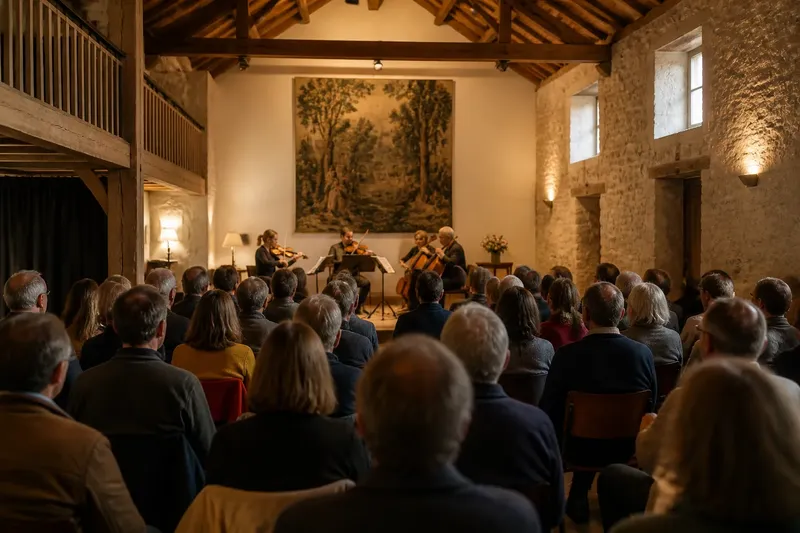
An Unhurried Plan for a Summer Concert Outdoors
Plan a summer concert outdoors with a clear arrival, sensible weather and seating choices, and a quieter journey home, without crowding the evening.
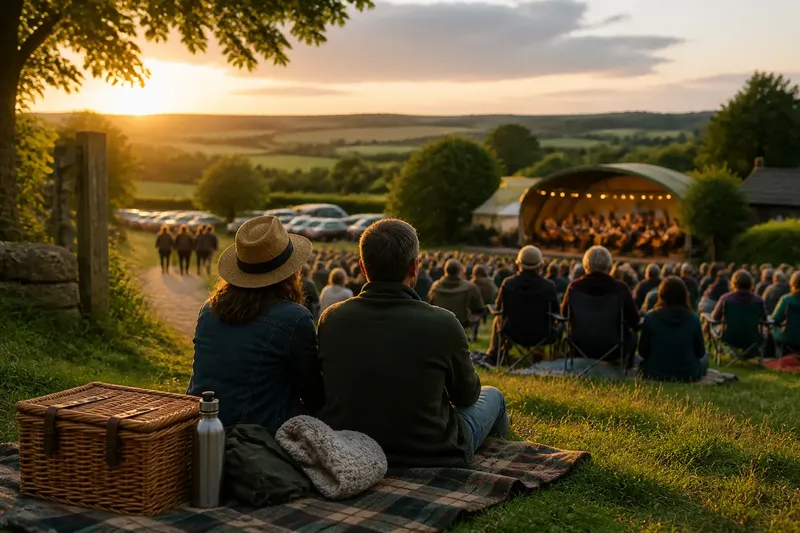
The common mistake when planning a summer concert outdoors is treating the performance time as the evening’s starting point. That leaves the drive, parking, changing weather and walk to the field competing for attention just as the music begins. A calmer plan works backward from the performance and leaves a little unscripted time around it.
Arrival and route
Rushing often starts with a vague departure plan: “We’ll leave after work” or “It’s only a short drive.” In the countryside, a short drive can still include a narrow lane, a farm entrance that is easy to miss or a car park set well away from the stage. The problem is not necessarily distance. It is the time spent outside the car.
Check the venue’s arrival guidance and the advertised music time. Then look at the route, parking arrangements and walk from the car park. If the event asks people to arrive early, treat that as part of the occasion rather than spare time to reclaim. If no arrival guidance is given, contact the organizer instead of relying on a map estimate alone.
Choose a departure time that lets you arrive without hurrying. Save the address, entrance name and parking note in a message or downloaded map, since reception can be patchy on rural roads. Agree who is driving and where the group will meet if people arrive separately. These decisions are easier at home than beside a closed gate.
Say you are going to a meadow concert reached by a single-lane road, and the advertised music begins at dusk. You check the venue’s arrival note, save the field entrance in your phone and agree to meet at the village shop before continuing together. The expected result is that everyone reaches the correct entrance without coordinating calls from separate lay-bys.
Weather and clothing
Outdoor forecasts can make planning feel like a choice between packing for a heatwave and carrying half a wardrobe. Plan for the conditions at the venue and the length of the event, not one forecast snapshot. An open field may feel cooler after sunset, while a sheltered garden may hold warmth. A forecast for the nearest town is useful context, not a description of your seat.
Check the forecast on the day and read the venue’s weather policy. Some events move indoors, delay the performance or cancel; others continue in ordinary summer rain. The organizer’s instructions determine what is permitted, including umbrellas, chairs and gazebos. Pack to suit those arrangements rather than assuming every outdoor concert has the same rules.
Think in layers you can carry easily. A light sweater or windproof layer may be useful after sunset, even if the afternoon felt warm. A compact rain jacket keeps your hands free and is easier to manage than an umbrella in a crowded audience. If the ground may be damp, choose shoes that can handle grass and uneven paths; dress shoes have no special authority over mud.
Sun protection matters if you will be outside before the music starts. Consider a hat, sunscreen and a refillable water bottle if the venue permits them. Keep the bottle accessible rather than buried under a blanket. Bring any personal supplies you normally rely on, and follow relevant professional advice. Do not assume there will be a shop, a shaded waiting area or a convenient refill point.
Seating and access
People often pack a chair or blanket without checking the audience arrangements. The result can be a bulky item that is not allowed, or a seat that leaves someone uncomfortable. “Outdoors” is not a seating instruction. Venues may provide seats, ask the audience to bring them or use a standing area.
Read the event details for seating, accessibility and ground conditions. If the information is unclear, ask whether chairs are allowed and whether there is a level route from parking to the audience area. Anyone who needs a particular seating arrangement should contact the organizer in advance; a grassy slope and an accessible path are separate questions.
If you bring a folding chair, check that it is stable and suited to the surface. A low chair may be considerate where most people sit on blankets, but it may not suit everyone. A blanket is easier to carry and useful while waiting, though it offers little protection from damp ground unless it has a suitable backing. Choose what fits the rules and your needs, not what looks most concert-like.
Keep your seating footprint modest. A large spread can block sightlines or take space from others, especially at a small village event. Leave room for people to pass and avoid placing a chair where it narrows a path. If the ground or layout differs from what you expected, ask a steward where to settle rather than improvising across a marked route.
A lighter evening
A concert can feel hurried even when arrival goes smoothly. The usual reason is fitting too many errands, meals and social visits around a performance with a fixed start and end. Outdoor events invite people to make a whole day of it, but the audience does not need to turn the time before the music into a second itinerary.
Decide what would make the occasion pleasant, then leave the rest optional. You might bring a simple picnic, stop at a nearby café or eat at home before leaving. Check whether food and drink are permitted, whether vendors will be present and whether the event has an interval. Do not rely on a nearby pub or shop without checking its opening arrangements; rural venues do not always have a convenient fallback next door.
Build in a pause between arriving and settling. It gives you time to find the toilets, notice the entrances and exits, and choose a place without doing so during the opening music. Then stop organizing. Repeatedly checking the route home or rearranging an adequate picnic will not improve the performance.
Imagine a group leaving from home with a picnic packed and a café stop still under consideration. They check that the venue permits outside food, confirm the café’s hours and find that the route to the concert passes its village. They decide to keep the picnic as the plan and the café as an option only if arrival is comfortable; if the drive runs late, they skip the stop and go straight to the venue. The result is a clear choice without trying to recover every minute.
Listening and position
Outdoor sound differs from sound in a village hall. Wind, distance and an open layout can make a performance seem less present from some spots. A place with a clear view may be close to a path, bar or entrance, where movement and conversation compete with the music.
When you arrive, choose a position that balances hearing, visibility and comfort. Use any designated quiet or accessible area as directed. Do not cross ropes, enter the performer’s space or stand in a route to improve your view. If you need to move, wait for a natural pause and choose a place without disturbing others.
Keep conversation and phone use considerate, especially during quieter pieces. Put your phone on silent and avoid a bright screen where it may distract nearby listeners. Step away from the audience to take a call. Open air carries voices farther than people expect.
Departure and transport
The final applause can send everyone toward the same narrow path. Check where the car is parked, how the venue directs foot traffic and whether the organizer gives an exit notice. Keep keys and a light source easy to reach if the route will be dark.
If you are driving, agree on a sober driver before the event and follow local rules. Do not assume you can drive simply because the venue is rural or public transport is limited. If you are unsure how to get home safely, arrange transport in advance or ask the organizer about local options. For a group, choose a clear meeting place outside the main flow rather than trying to find one another beside the gate.
There is no need to race to the car at the first note of the final piece. If the arrangements allow it, wait briefly for the crowd to thin, or leave promptly if standing is difficult. Follow stewards’ directions and keep paths clear. A measured departure is less about lingering than avoiding another rush after the music.
What should you check before leaving?
How early should I arrive?
Use the arrival time given by the organizer, then allow for the route from parking to the audience area. If no time is stated, ask the venue rather than treating the performance start as the recommended arrival time.
What should I bring to an outdoor concert?
Start with items that address the venue’s conditions: a layer, weather protection, suitable shoes and any permitted water or seating. Check the event rules before packing chairs, umbrellas, food or other bulky items.
What if rain is forecast?
Read the event’s weather policy and follow updates from the organizer. Bring practical rain protection if the event is proceeding, and do not assume umbrellas or an indoor move will be available.
How can I make the evening less rushed?
Save the venue details, choose a departure time, settle the transport plan and make optional stops genuinely optional. Leave a quiet stretch before the performance so arrival does not feel like another task to complete.
Before you set out
Use this short check to turn the plan into decisions rather than a longer packing list:
- Check the organizer’s arrival time; if it is stated, plan around it, and if it is missing, ask the venue rather than guessing.
- Check the saved route and entrance name; if they match the venue’s directions, keep them ready offline, and if they conflict, confirm the correct entrance before leaving.
- Check the weather policy and day-of update; if the event is proceeding outdoors, pack suitable layers and rain protection, and if it has moved or been canceled, follow the organizer’s new instructions.
- Check seating and access rules; if your chair or blanket is permitted and suits the ground, bring it, and if not, leave it behind or ask the organizer about an appropriate alternative.
- Check food and drink rules; if your picnic is allowed, pack it, and if it is not, plan to eat beforehand or use a confirmed vendor.
- Check the route home and driver plan; if a sober driver and safe route are settled, keep the details accessible, and if either is uncertain, arrange transport before setting out.
A summer concert outdoors needs only a few settled decisions about getting there, staying comfortable and getting home. Check the venue’s latest notice, route and chosen items before you leave, then let the remaining time stay open. The walk across the grass and the changing light over a field are already part of the evening; neither needs another appointment.